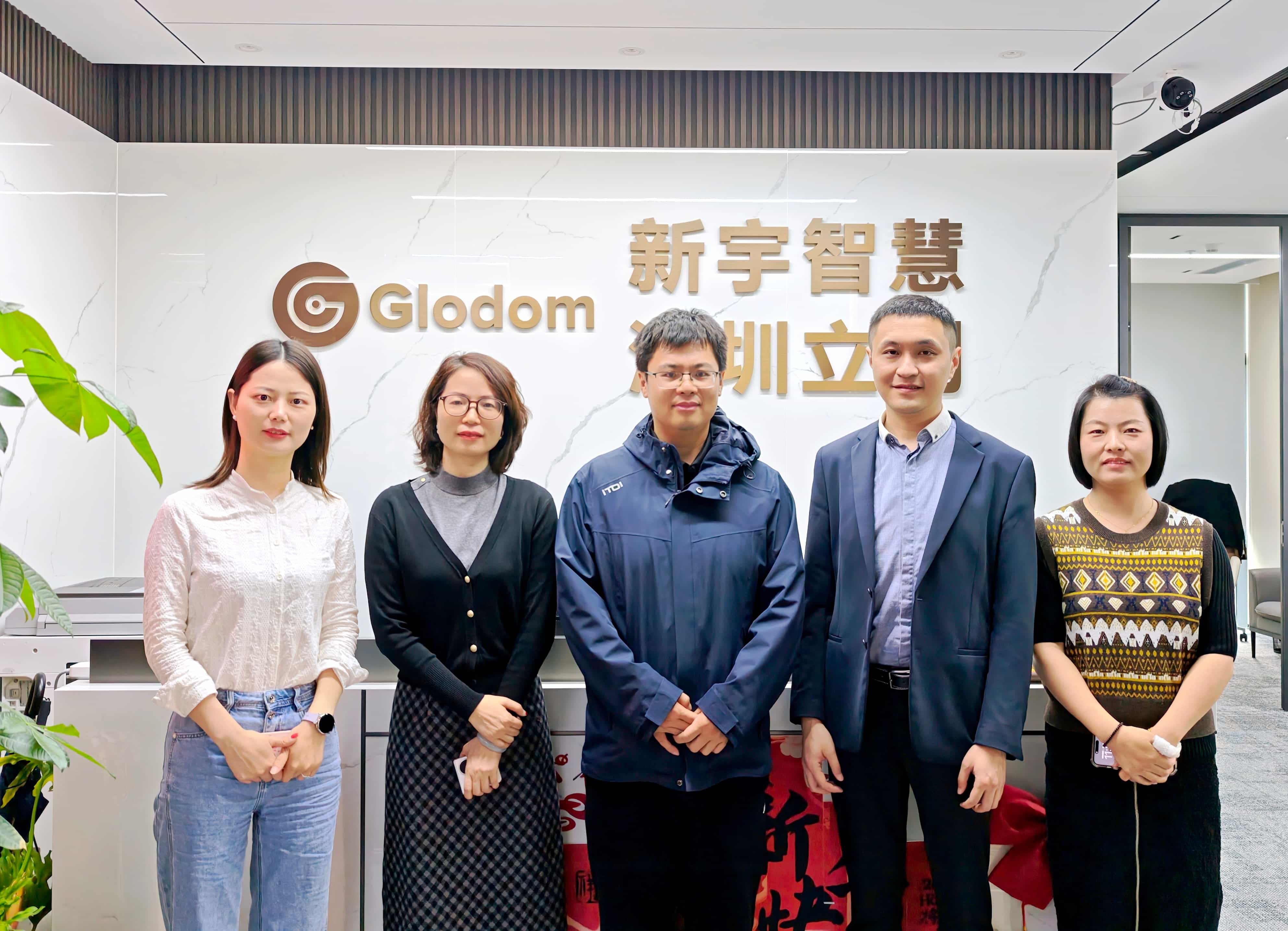
Spring is in the air and fresh ideas are flowing. On March 9, 2026, the Deputy Secretary of the School of Foreign Languages, China University of Geosciences (Beijing), led a delegation to visit Glodom. The two sides held in-depth discussions on training language-service professionals for the age of artificial intelligence, strengthening university–enterprise cooperation, and exploring new collaborative education models.
Understanding industry change and new talent needs
With artificial intelligence, big data, and related technologies increasingly embedded in language services, demand for hybrid, practice-oriented professionals is growing rapidly. During the visit, Glodom presented its technical architecture, quality-control standards, and experience in translation technology, localization services, and project management. Both parties agreed that tomorrow’s language professionals need solid linguistic foundations plus applied technical skills, project-management thinking, and strong cross-cultural communication competence.
Innovating training models: bridging academy and industry
Conversation focused on narrowing the gap between university curricula and enterprise needs. How can students graduate already ready for real project work? Glodom shared past experience co-building internship bases and joint training programs with universities, highlighting the value of real translation projects and AI-assisted tools for hands-on learning. The visiting deputy secretary described the School’s recent curriculum reforms and interdisciplinary experiments, and welcomed stronger enterprise involvement to give students more access to cutting-edge tools and industry projects. Both sides discussed course co-development, joint research topics, and other collaboration formats aimed at creating a seamless “teaching → practice → employment” talent pipeline.Moving forward together to empower the future of language services
The exchange opened fresh possibilities for deeper cooperation between Glodom and the School of Foreign Languages. Both parties emphasized that, amid rapid industry transformation, strengthening university–enterprise links and promoting integration of production and education are essential to cultivate high-quality talent that meets contemporary needs.