

Excellent games feel like rich, coherent worlds that satisfy expectations on multiple levels. The recently spotlighted Arknights: Endfield is a case in point: while much of the conversation has rightly focused on its gameplay depth, its restrained, quietly distinctive visual aesthetics are a major — and often overlooked — part of its appeal.

1. Less Is More: A Natural Foundation
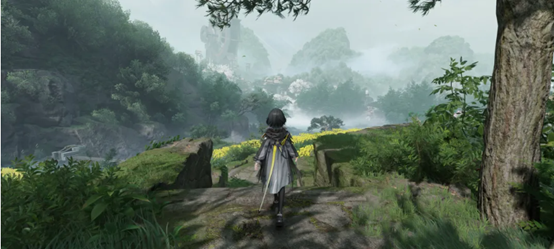
Unlike many titles that chase a highly stylized or hyper-saturated look, Endfield takes a calmer path. Its visuals do not rely on saturated color bombs, showy bloom, or exaggerated material effects. Instead, the game favors steady, natural tonalities and even leans into cool gray ranges that are uncommon in comparable works.
This de-stylized, de-decorative approach isn’t a shortcut to simplicity. It’s a deliberate return to fundamentals: building a believable, warm visual base that supports the world rather than shouting for attention.
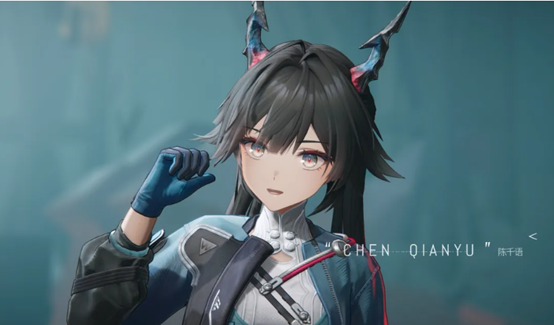
That restraint extends to detail work. Textures on clothing, the layering of hair, and subtle material responses to light are all carefully crafted — yet always tuned to the whole. Those details aren’t there for single-frame impact; they accumulate to produce convincing volume and a sustained sense of presence, allowing the player to feel immersion more than momentary surprise.
2. A Welcoming Canvas: The Power of a Neutral Base
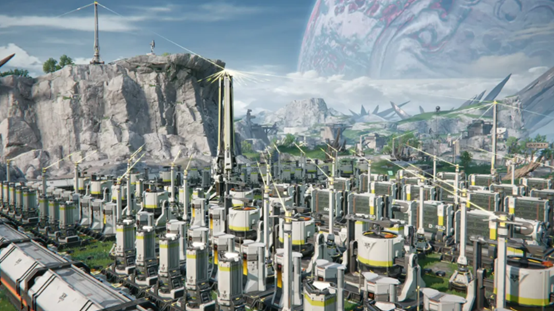
A “clean” visual baseline like this brings surprising inclusivity: the game’s scenes become a stable, open carrier for diverse elements. Misty rain and cool embers, or the complex interplay of lights in industrial installations, integrate into the same scene without stylistic clash.
That flexibility is also practical. Under a natural aesthetic umbrella, future content — different biomes, architectural languages, and thematic expansions — can be introduced without breaking visual coherence. Critically, it helps two-dimensional character illustrations translate naturally into three-dimensional in-game presences, preserving the characters’ identity across formats.
3. Reviving Spirit: An Expressive Modern Chinese Aesthetic
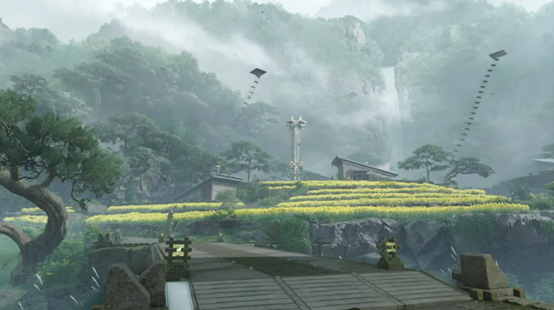
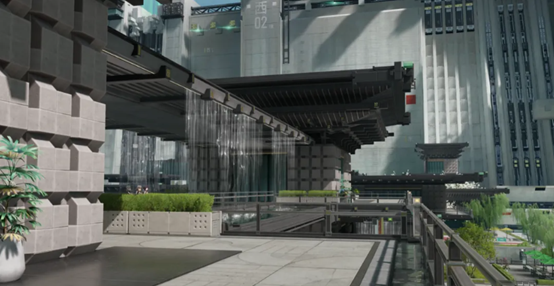
Endfield’s aesthetic practice offers a notable interpretation of what “modern Chinese style” can be. In the game’s Wuling area, the achievement goes beyond merely borrowing traditional motifs: it captures the subtle, inward-looking spirit that characterizes a lot of East Asian aesthetics.
Through high-grade gray textures, layouts that play with positive and negative space, and ink-like atmospheric rendering, the game establishes a faint, clear Eastern sensibility. Even more interesting is how modern design language — clean structural lines, contemporary elevated forms, and engineered water features — is blended with classical impressions such as the “high mountain and flowing water” mood. The result is a readable dialogue between heritage and modernity rather than a pastiche of either.
4. A Deeper Taste: Why Subtlety Matters
The natural, restrained beauty shown in Endfield demonstrates an alternative aesthetic paradigm for animated and stylized games: emotional depth and narrative tension do not require loud visual spectacle.
A subdued, detail-oriented aesthetic that prioritizes atmosphere and material truth can carry expansive worldbuilding and convey a more durable, contemplative texture. Understanding and creatively translating cultural essence — not merely copying surface motifs — is what allows content to cross borders and resonate with varied audiences. That careful cultural translation, when executed well, is a cornerstone of high-quality localization.
Source: Article adapted from GameRes.
Image credit: GameRes.
Copyright & Disclaimer: This article is adapted from GameRes and does not imply ownership by Glodom. Views expressed are the author’s and do not necessarily reflect Glodom’s official position. For copyright concerns, contact info@glodomtec.com.
