

Z.A.T.O. // I Love the World and Everything In It — a small but remarkably resonant visual novel by Belarusian solo developer Ferry — arrives like a delayed radio love letter from beyond the Arctic Circle. Praised by players and critics for its atmosphere and emotional precision, the game does more than wear a “Soviet aesthetic” badge: it weaves a sealed, difficult history into a story about loneliness, love and the question of what it means to exist.
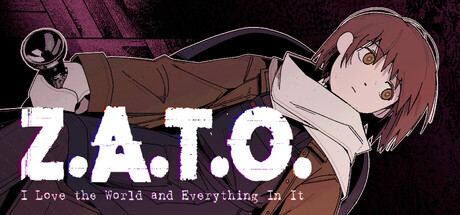
The narrative opens in 1986 inside a secret administrative settlement named Vorkuta-5, a place that does not appear on ordinary maps. Life there is not a single note of bleak uniformity; instead, Ferry paints small daily scenes with a poet’s eye—Slavic cinema facades, a café that serves a curious potato-based pastry, and conversations in the library with friends. Using a stream-of-consciousness mode, the game carries the player step by step through the protagonist Asya’s inner voice: the way she leans on surprising imagination to swallow the sting of school bullying, and the tender, precarious friendship she shares with the “bad girl” Ira. The warmth of these everyday moments is set against the long polar night, which gradually primes the player for the deeper mystery to come.
When Ira disappears, Asya’s search reveals the town’s core secret: a phenomenon described in the game as “code-allergy”, a condition in which sufferers begin to perceive the world’s “underlying code” and then subtly lose their connection to others until they fade away. As the plot unfolds, it becomes clear that Vorkuta-5 is experiencing a collective erasure. The ending refuses the relief of a rescue narrative; instead it stages a communal, hushed farewell. Before everything dissolves, Asya climbs the municipal tower and sends one last Morse transmission into the cosmos: a single repeated message — “I love you.”
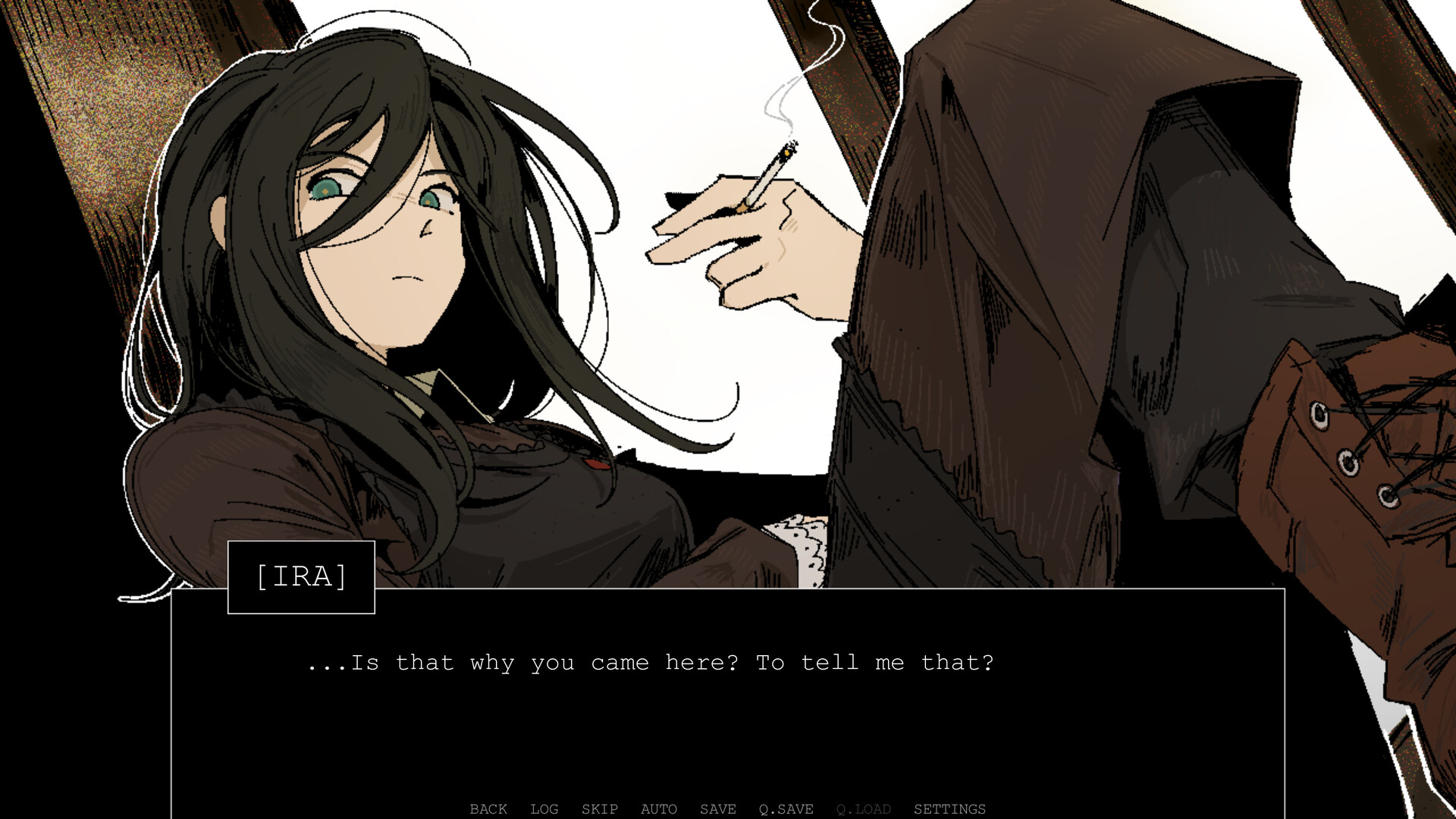
That final transmission is both a personal act and the game’s literary interrogation of historical truth. Many players and analysts have read Vorkuta-5 as a deliberate echo of real Cold War-era closed towns and the disasters that were covered up. The game’s title — Z.A.T.O. — itself calls to mind the Russian administrative term ZATO (closed administrative-territorial formation), the official designation for secret or restricted Soviet/Russian towns. This double meaning—both a geopolitical label and the Russian conjunction meaning “but”—captures the game’s central tension: knowing the hidden suffering, enduring the inevitable losses, and still choosing to love the world.
The metaphor in the game — the town’s “scorching aurora” and the residents’ gradual disappearance — is widely read as an allegory of concealed nuclear catastrophe and the long-term psychological damage it leaves behind. Historical parallels are often drawn to the Kyshtym disaster (1957) at the Mayak facility, a catastrophic radiation event that was long denied or obfuscated by Soviet authorities before becoming publicly known decades later. The game’s symbolism—radiant phenomena masking a slow communal vanishing—acts as a compact, humane rendering of such buried histories.
What makes Z.A.T.O. exceptional is that it resists simple indictment or melodrama. Its Russian title and formal conceit allow the game to hold ambivalence and refusal simultaneously: to witness, to mourn, and yet to affirm. Several commentators have compared Asya’s insistence on love in the face of absurdity to the archetype of the “holy fool” in Russian literature—an apparently irrational stubbornness that nevertheless testifies to truths obscured by reason or ideology.
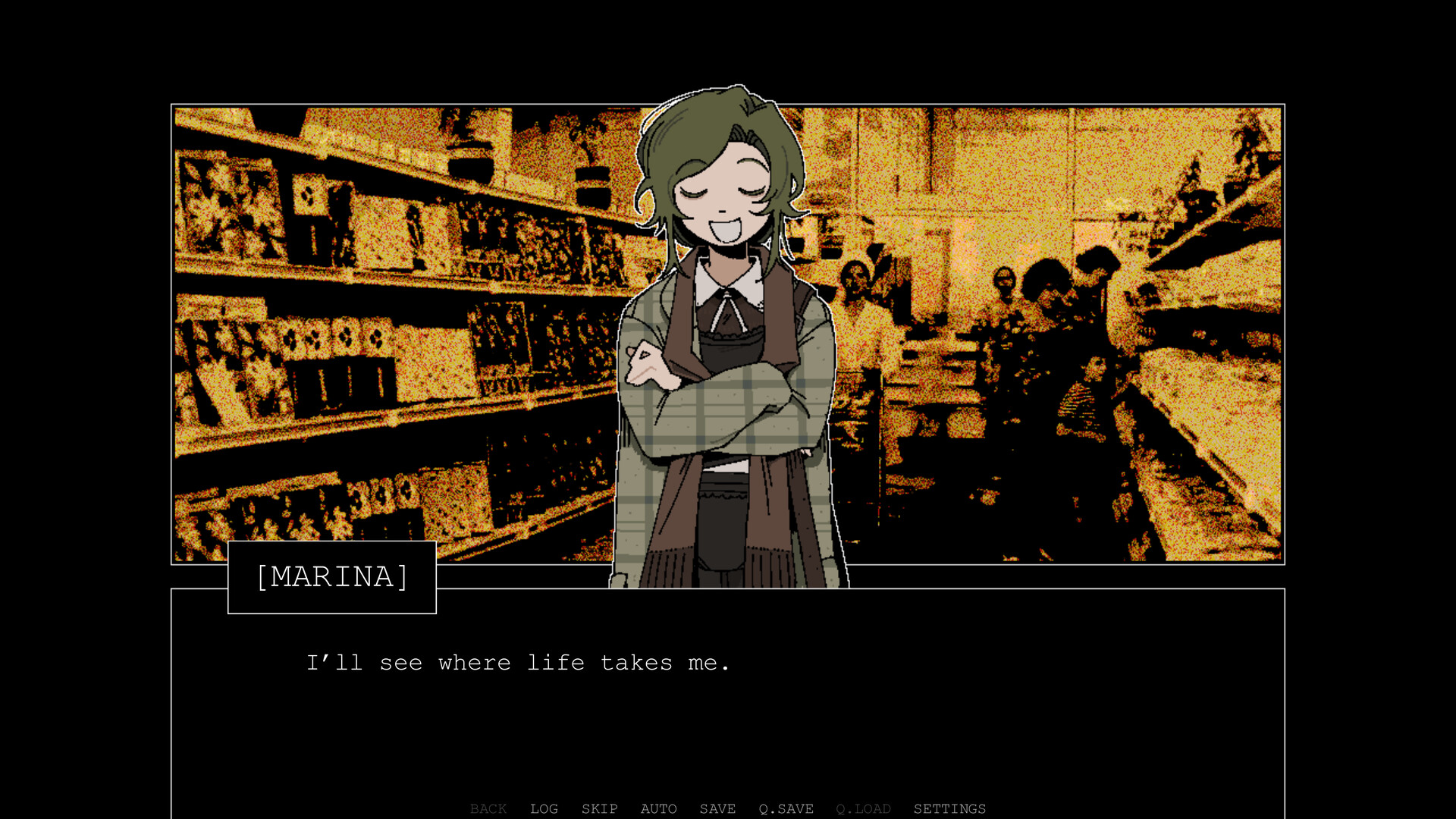
Seen through the intimate lens of one girl’s perception, the game stages a broad existential experiment. It probes how an individual stands before historical systems and collective trauma, and it offers a final image that is not capitulation but evidence: Asya’s transmitted “I love you” becomes proof of existence that radiation and bureaucratic erasure cannot cancel. The signal that reverberates through the game’s world insists that some things—human courage, the decision to embrace life after seeing its dark seams—outlast concrete and polar cold. The game’s radio love letter lands not only in its fictional cosmos but in the hearts of its players; it reminds us that history lives not only in files but in stories, feeling and echo.
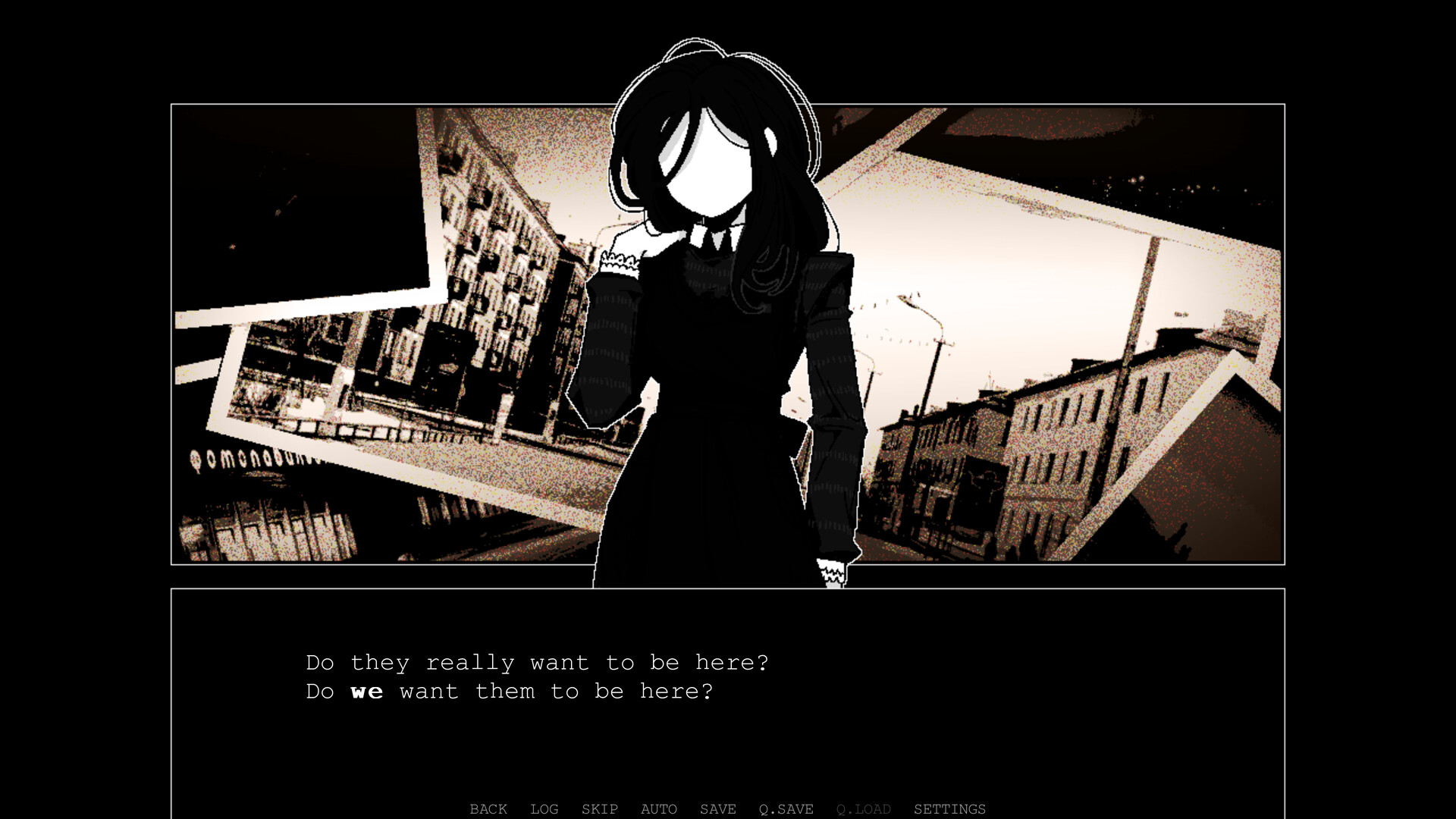
Why this matters for localization.
The success of Z.A.T.O. demonstrates that stories tightly rooted in a particular cultural soil can nevertheless move a global audience — provided they are translated and presented with care. Presenting a work steeped in Slavic literary cadence, philosophical inference, and cultural allusion to a Chinese or international audience requires more than literal rendering: it demands sensitive, creative localization that preserves voice, rhythm and implication while making the text fully accessible. This is the kind of project we specialize in at Glodom.Our localization offering for narrative-driven games includes:
If your game carries a story that deserves to be heard worldwide, we want to help it find the right voice. We make sure culturally specific, narratively ambitious games complete their journey from local soil to global ears—so every story that matters can meet its audience.
- Cultural adaptation & contextual reconstruction. We unpack historical metaphors, literary echoes and social context so the localized script retains the original’s depth while resonating naturally with the target audience.
- Narrative voice consistency. We reproduce stylistic devices—stream-of-consciousness, poetic monologue and tightly controlled pacing—so the emotional trajectory remains intact across languages.
- Emotional fidelity. We prioritize preserving the affective tone: the game’s quiet tenderness, its unsettling undertow, and the small human gestures that make its themes tangible.
About Glodom
Shenzhen Xinyu Zhihui Technology Co., Ltd., operating as Glodom, is an innovative language-technology solutions provider with deep expertise in game localization. We collaborate with major game companies worldwide, employ more than 300 full-time staff and maintain a network of over 10,000 native linguists across 40+ countries, supporting more than 200 languages. Combining advanced tooling and seasoned project management, Glodom helps clients execute global strategies with high translation quality and efficient multilingual workflows.Image source: Steam (for sharing only). If you have concerns, please contact info@glodomtec.com
