

1. A crowded May lineup, but no single reception trend
May was an unusually busy month for newgame releases. From mid- to late-May, three highly anticipated titles — Subnautica2, Forza Horizon 6, and 007 First Light — launched in close succession. Theirrelease windows overlapped, but their reception did not move in lockstep.Players’ discussion topics, review priorities, and overall sentiment began todiverge almost immediately.
That divergence is more worth payingattention to than the simple question of which game “sold better.” It showsthat players are now far less likely to arrive at one shared conclusion about agame. Some judge first by systems, some by atmosphere, and some by whether thenarrative holds together. That is where reception starts to split.

2. Subnautica 2: strong commercial momentum, but divideddebate
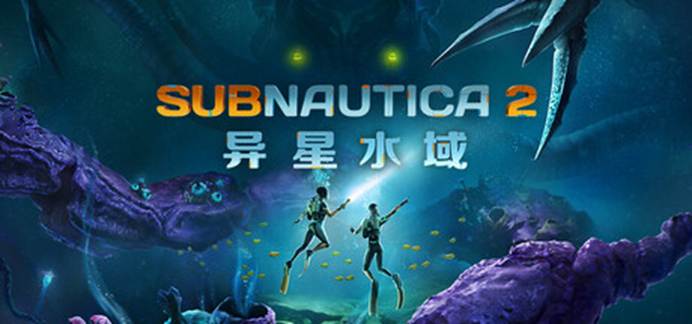
The most controversial of the three was Subnautica2, which entered Early Access on May 14. The underwater survival sequel openedwith numbers that were hard to ignore: first-day sales surpassed 2 millioncopies, player reviews went beyond 90,000, and the positive rating reached 91%.
The features that drew the strongest praisewere the co-op mode, the underwater visuals rendered in Unreal Engine 5, andthe continuity of its survival-crafting systems. At the same time, IGN gave thegame a 7/10, arguing that its content volume still falls short of what a sequelshould offer, that the narrative pacing is slow, and that there is still agreat deal of content left to be filled in for an Early Access build.
This contrast between commercial successand media caution comes down to the fact that each side is measuring somethingdifferent. Players are expressing trust in the IP and tolerance for the EarlyAccess model through sales and positive reviews. Media scores, by contrast,focus more on how complete the product feels. The same game, viewed through twodifferent lenses, naturally leads to two different conclusions.
But the player conversation was not unifiedeither. The decision to scale back combat became a particular point ofcontention, especially among Chinese players. Some argued that the game createsan underwater world full of aggressive creatures, with hostile predators ableto track and attack the player repeatedly, while the developers, as therule-makers, have chosen to remove the player’s ability to fight backaltogether. From that perspective, the design was criticized not as a statementagainst violence, but as a one-sided tilt in favor of the attacking side.
Others felt that avoiding direct combat andrelying instead on stealth and tools is precisely what gives the Subnauticaseries its identity. For them, that sense of vulnerability is part of thedeep-sea experience.
What makes this debate important is that itgoes beyond simple gameplay preference. At its core, it asks what kind of gameplayers want Subnautica to be. Some value the deliberate fragility the seriespreserves. Others believe that as the danger grows stronger, the player shouldat least have a more active way to respond. Behind those two positions are twovery different understandings of what a survival game should be.
3. Forza Horizon 6: immersion first, adrenaline second
On May 19, Forza Horizon 6 arrived on XboxSeries X|S and PC. This time, Playground Games set the game in Japan. Comparedwith the series’ more direct past openings, it does not rush players intoracing. Instead, it first places them in the world as newcomers.
Tokyo streets, mountain roads, conveniencestores, and tuning-shop hangouts appear before the races do.
A lot of the discussion therefore centeredon atmosphere. Some players loved the approach, saying it finally broughtJapanese street culture into the Horizon world in a meaningful way. Nightstreets, winding mountain roads, and the details of small modification shopswere often singled out for praise. Others felt the pacing had slowed down toomuch, and that the game no longer delivered the immediate adrenaline rush theyassociated with earlier entries.
There was also criticism around charactermodels. Compared with the cars and environments, the human character workclearly feels less polished, and players have not been shy about joking aboutit.
Taken together, these reactions point to avery clear shift in intent. This time, Forza Horizon 6 seems to want players tolive inside the world, not just keep racing through it. For players who valueimmersion, that makes it feel like the most complete upgrade in the series sofar. For players who care most about the pure racing experience, it may feellike some of the old, straightforward thrill has been lost.

4. 007 First Light: the most balanced reception, but fordifferent reasons
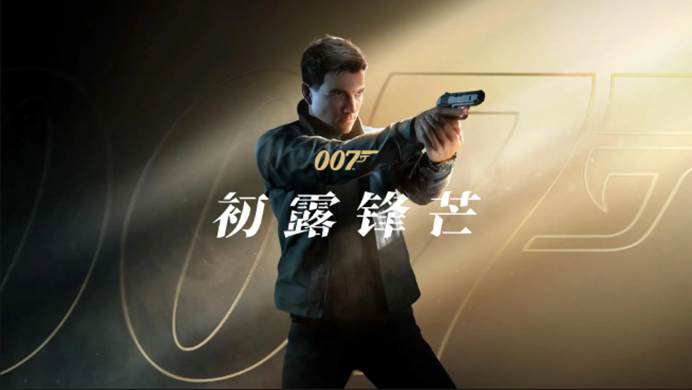
Released on May 27, 007 First Light showeda different kind of reception pattern. IO Interactive returned to Bond’sbeginning and told the story of a young, impulsive MI6 recruit. Rather thanrelying on an existing film plot, the studio rebuilt the narrative fromscratch, blending stealth, disguise, gunfights, and scene direction intosomething that feels like an “interactive Bond film.”
That direction was broadly well received bythe media. Reviews generally praised the game for re-energizing the characterthrough solid craftsmanship instead of leaning on the IP alone.
Player feedback, however, split into twogroups. Players who value story and character work gave high marks to thegame’s pacing and presentation. Those who expected deeper systems and morereplay value, on the other hand, felt that the game held back in terms ofmechanical depth.
The reason for that split isstraightforward. When a game treats narrative and character as its corestrengths, it is essentially inviting players to experience it with the mindsetof watching a good film. Players who accept that invitation are likely to findthe experience fitting and satisfying. Players who still approach it expectinga highly systemic game, however, may come away feeling that it is not quiteenough.
5. What May’s reception split really tells us
Seen together, these three cases make thereal reason for May’s reception divide much clearer. It was not about whichgame was simply “better” or “worse.” It was about each game answering adifferent expectation — and those expectations did not share the same standardsof judgment.
Some players look at visuals first, some atmechanics first, and some at whether the story flows naturally. Differentpriorities lead to different reception paths.
So the real story of May’s new releases isnot which one drew the most attention. It is how clearly they showed one fact:in a player base that is becoming more segmented by the day, divided receptionis no longer an exception. It is the norm. And the games that stand firm withinthat division are usually not the loudest ones, but the ones that know exactlywhat they are, and deliver that core experience consistently to the audience.
All images used in this article arecopyrighted by the respective game developers and publishers. They are includedhere solely for the introduction and presentation of game content, and there isno intention to infringe on any party’s legal rights. If anything isinappropriate, please contact info@glodomtec.com for removal.
About Glodom
Glodom is an innovative provider of language technology solutions, with deep expertise in game localization. We maintain long-term partnerships with leading global game companies.With over 300 in-house professionals and a network of 10,000+ native linguists across more than 40 countries, we support over 200 languages worldwide.Combining advanced technology with extensive project management experience, Glodom helps clients execute global strategies with precision and efficiency. From localization quality to large-scale multilingual delivery, we remain at the forefront of the industry.
