

1. The Problem Isn’t Always “Too Little Content”
One of the most common problems inrole-playing games is not that they do not contain enough content, but thatplayers quickly see through the formula. Many games appear to offer choices,but in reality, they simply place a few preset paths in front of the player.What the player does, then, is little more than move forward by picking oneoption from a limited set.
To put it plainly, that kind of experienceoften feels more like performing for the system than truly acting within aworld.
2. Why Baldur’s Gate 3 Feels Different
What makes Baldur’s Gate 3 stand out isthat it does not treat “choice” as decoration.
Its real strength is not the number ofbranches, nor the length of the story. It is the way it turns narrative intosomething that grows on its own, with each part tied to the others. It is hardto isolate any one decision, because it tends to return later in a new form, ata different moment.
That is also what sets it apart fromtraditional branching narratives. The logic of a branching structure is easy tounderstand: one main trunk splits outward, and once you choose one path, theothers are essentially closed off. The problem is not that this structure istoo simple. The problem is that it too easily gives players the feeling thatthey are only stepping into one of several routes already laid out by thewriter.
A web-like narrative, by contrast, feelsmore like an interconnected system. Earlier actions are not brushed aside. Theyremain in the world, waiting to take effect again when the time is right.
That is why the experience in Baldur’s Gate3 does not feel like “I am making choices.” It feels like “I am pushing eventsforward.” The difference may seem small at first glance, but in practice it isenormous. The former is more like pressing buttons; the latter is much closerto action. Players can clearly feel that their decisions are not one-timeevents. They gradually reshape relationships, alter the direction of events,and even change how the world itself is understood later on.
When a story can truly do that, immersiondoes not come from piling on scenery. It grows naturally from the structureitself.
3. Failure Is Not Treated as a Dead End
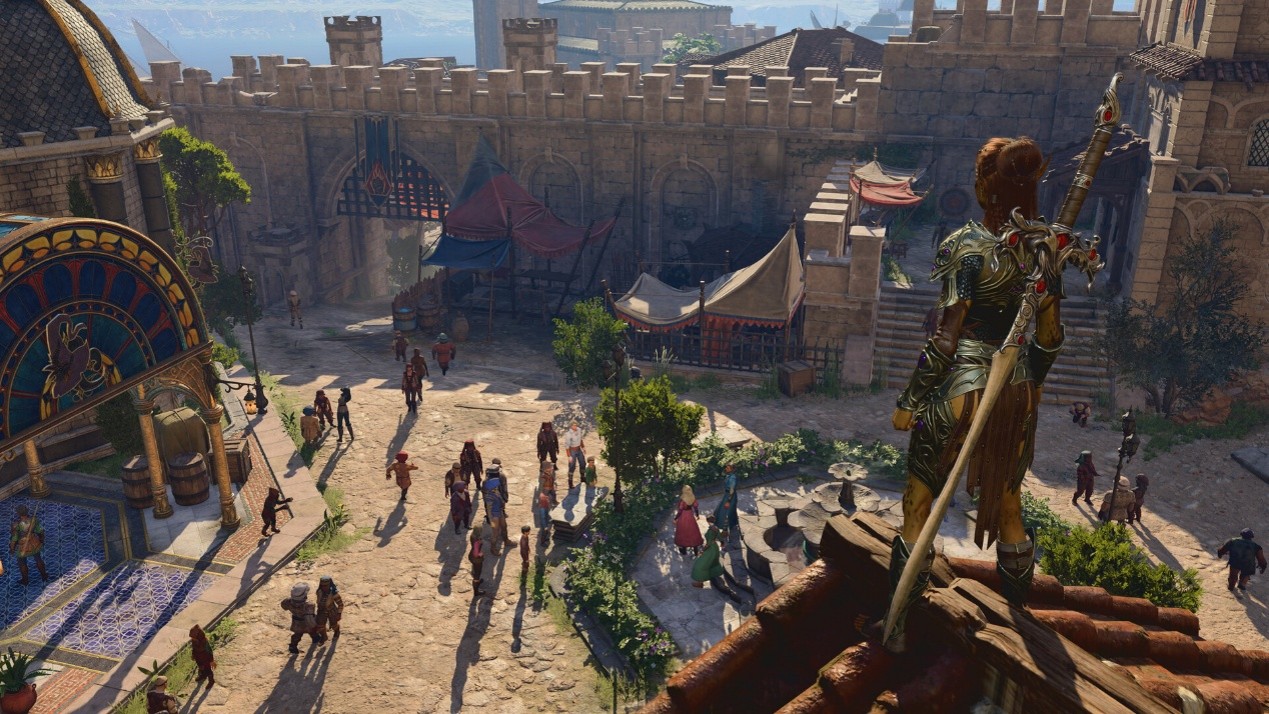
Another thing the game does especially wellis that it does not treat failure as a pure setback.
Many games treat failure as a “wronganswer.” You reload. You try again. It can feel as though, unless you reach theoptimal result, the experience does not really count. Baldur’s Gate 3 takes amuch looser approach. Missing a check does not mean the story stops. Moreoften, it means another thread begins moving forward instead.
That is powerful, because it acknowledges avery real truth: people are not always right, and events rarely unfold exactlyas expected. Yet many works still try to make the experience feel too“correct.” Every step has to be stable. Every outcome has to be controlled. Inthe end, that only flattens the journey.
Baldur’s Gate 3 chooses a different path.It is not afraid of deviation. In fact, it seems to rely on deviation to createa sense of life. Players are not simply confirming that they made the rightchoice. Instead, they gradually come to accept, through repeated surprises,that things were never going to unfold exactly as planned.
From that perspective, the dice mechanic isnot just a traditional tabletop role-playing element. It is part of the game’soverall narrative attitude. It makes the world feel less mechanical and lessobedient. Of course, players can do everything they can to raise the odds ofsuccess, but the system still preserves a degree of unpredictability. Thatsmall amount of uncertainty is what gives the whole experience a sense ofbreath. Only when the outcome is not fully predictable do choices truly carryweight, and only then can a story begin to grow in meaningful ways.
4. The Story Does Not Rush to Judge
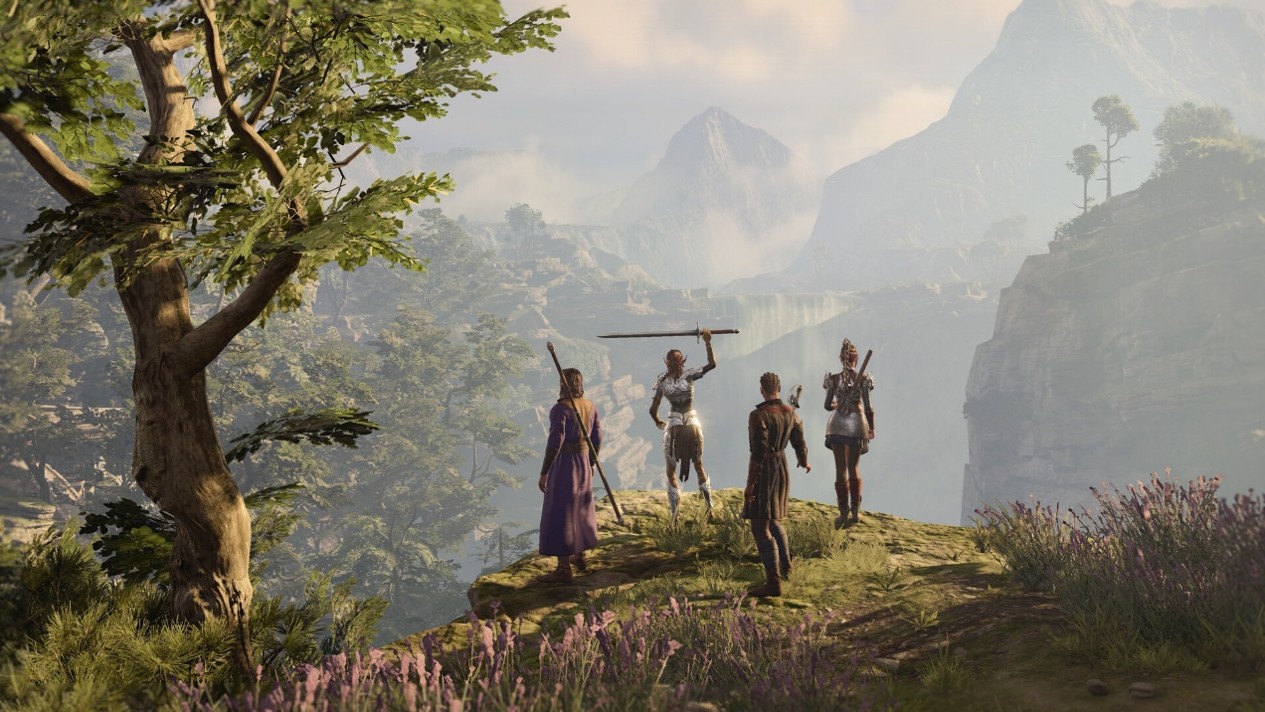
Another strength of Baldur’s Gate 3 is thatit never rushes to tell the player what to think.
Many linear narratives cannot resistexplaining what is right and what is wrong, who deserves sympathy, and whoshould be opposed. They can certainly work, but they also make it very easy toguide the audience into a prearranged emotional position.
The brilliance of a web-like narrative isthat it does not hurry to take sides. It lays out the conflict, presents theinterests involved, and opens up the motives of each character, then lets theplayer weigh everything for themselves.
That gives the story more gravity. You areno longer simply listening to a fully formed argument. You are making ajudgment inside a complicated situation, and that judgment always has a cost.It leaves a mark.
Often, what people remember most is not a“perfect ending,” but the process itself—the parts that were imperfect, evenregretful.
In a sense, that is much closer to genuinerole-playing: you are not just an observer. You have to take responsibility forwhat you do.
5. A System This Complex Has to Hold Together
Of course, this kind of design comes at acost.
It requires the text, states, branches, andcharacter logic to be tightly connected. If even one part does not line up, thewhole system can start to feel loose. That is why what stands out aboutBaldur’s Gate 3 is not only the sheer amount of content, but the way itmaintains a remarkably high level of internal consistency beneath that scale.
Many games market “more branches” as aselling point. But the real challenge has never been creating divergence. Thereal challenge is making sure those separate paths can still be brought backtogether in a way that feels natural.
6. The Real Strength of Baldur’s Gate 3
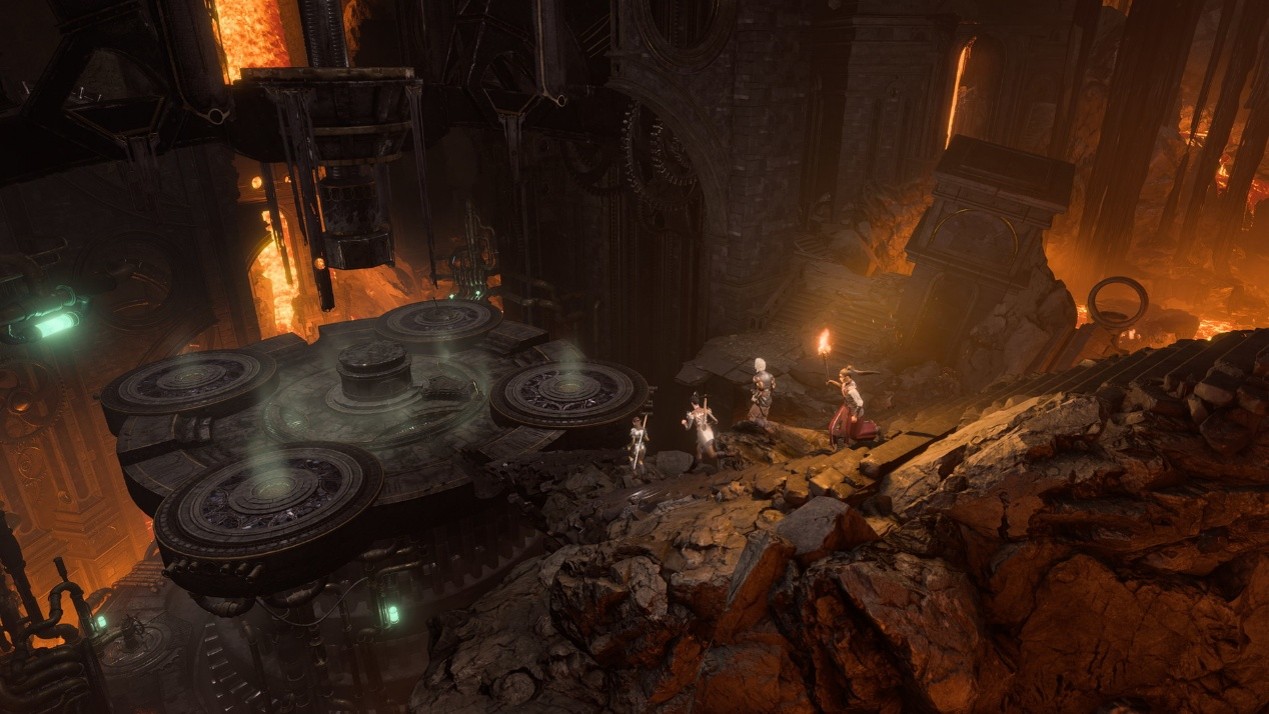
At its core, what makes Baldur’s Gate 3 somoving is not that it gives players more freedom. It is that it makes freedomfeel believable.
It does not package freedom as a slogan. Itplaces freedom inside the system, so that every small decision leaves an echo.Players keep returning to this world not because every playthrough leads to themost beautiful ending, but because the world truly responds to them. Even whentheir choices are not elegant, even when their route is far from perfect, theworld still answers back.
There are very few works like this. They donot win by being “fully designed.” They win by admitting that the world itselfis not neat and tidy. That is exactly why Baldur’s Gate 3 feels so convincing.Its real value is not that it showcases a highly complex system, but that itturns “choice” back into something meaningful.
Players believe in this world not becauseit is perfect, but because it keeps responding seriously to every action theytake.
All game-related images used in thisarticle are the copyrighted property of the original game developer andpublisher. They are used here solely for the introduction and presentation ofthe game content and are not intended to infringe on the legal rights of anyparty. If you believe any image has been used in error, please contactinfo@glodomtec.com for removal.
About Glodom
Glodom is an innovative provider oflanguage technology solutions, with deep expertise in game localization. Wemaintain long-term partnerships with leading global game companies.
With over 300 in-house professionals and a network of 10,000+ native linguistsacross more than 40 countries, we support over 200 languages worldwide.
Combining advanced technology with extensive project management experience,Glodom helps clients execute global strategies with precision and efficiency.From localization quality to large-scale multilingual delivery, we remain atthe forefront of the industry.
